Loading...
Back to Articles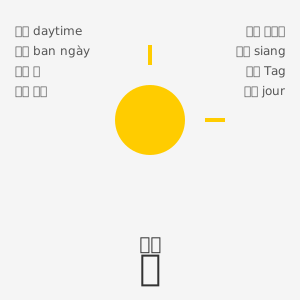
あいさつと礼儀(れいぎ)の文化
JAGreetings and Etiquette in Japan
11 Feb, 2026
12 sentences:
18 vocabulary
Source: Wakaru Lab
Type: Story
Furigana (Reading)
Article Text
日本ではあいさつと礼儀がとても大切です
人に会うときていねいな言葉を使っておじぎをします
昼にはこんにちはと言います
朝はおはようございます、夜はこんばんはと言います
おじぎは日本の大切な習慣です
ありがとうの気持ちやあやまる気持ちをあらわします
深くおじぎをするともっと大きな敬意をあらわします
日本人は毎日の生活でていねいな言葉を使います
ありがとうございますは感謝の言葉です
すみませんはあやまるときや人を呼ぶときに使います
礼儀は日本の文化の大切な一つです
人々が仲よく生活するためにとても大事です
Sentences (12)
#1
日本ではあいさつと礼儀がとても大切です
In Japan, greetings and etiquette are very important.
Show tokens (10)
日本
noun
で
particle
は
particle
あいさつ
noun
と
particle
礼儀
れいぎ
noun
が
particle
とても
adverb
大切
たいせつ
noun
です
auxiliary
#2
人に会うときていねいな言葉を使っておじぎをします
When meeting someone, use polite words and bow.
Show tokens (12)
人
noun
に
particle
会う
あう
verb
とき
noun
ていねい
adjective
な
particle
言葉
ことば
noun
を
particle
使って
使う
つかって
verb
おじぎ
noun
を
particle
します
する
verb
#3
昼にはこんにちはと言います
At noon, people say 'konnichiwa.'
Show tokens (6)
昼
ひる
noun
に
particle
は
particle
こんにちは
expression
と
particle
言います
言う
いう
verb
#4
朝はおはようございます、夜はこんばんはと言います
In the morning, people say 'ohayou gozaimasu', and in the evening, 'konbanwa'.
Show tokens (9)
朝
noun
は
particle
おはようございます
expression
、
symbol
夜
noun
は
particle
こんばんは
expression
と
particle
言います
言う
いう
verb
#5
おじぎは日本の大切な習慣です
Bowing is an important custom in Japan.
Show tokens (8)
おじぎ
noun
は
particle
日本
noun
の
particle
大切
たいせつ
noun
な
particle
習慣
しゅうかん
noun
です
auxiliary
#6
ありがとうの気持ちやあやまる気持ちをあらわします
It expresses feelings of gratitude or apology.
Show tokens (8)
ありがとう
expression
の
particle
気持ち
きもち
noun
や
particle
あやまる
verb
気持ち
きもち
noun
を
particle
あらわします
あらわす
あらわす
verb
#7
深くおじぎをするともっと大きな敬意をあらわします
A deeper bow shows greater respect.
Show tokens (9)
深く
深い
ふかく
adjective
おじぎ
noun
を
particle
すると
する
verb
もっと
adverb
大きな
大きい
おおきな
adjective
敬意
けいい
noun
を
particle
あらわします
あらわす
あらわす
verb
#8
日本人は毎日の生活でていねいな言葉を使います
Japanese people use polite words in daily life.
Show tokens (11)
日本人
noun
は
particle
毎日
noun
の
particle
生活
せいかつ
noun
で
particle
ていねい
adjective
な
particle
言葉
ことば
noun
を
particle
使います
使う
つかう
verb
#9
ありがとうございますは感謝の言葉です
'Arigatou gozaimasu' is a word of gratitude.
Show tokens (6)
ありがとうございます
expression
は
particle
感謝
かんしゃ
noun
の
particle
言葉
ことば
noun
です
auxiliary
#10
すみませんはあやまるときや人を呼ぶときに使います
'Sumimasen' is used when apologizing or calling someone.
Show tokens (11)
すみません
expression
は
particle
あやまる
verb
とき
noun
や
particle
人
noun
を
particle
呼ぶ
よぶ
verb
とき
noun
に
particle
使います
使う
つかう
verb
#11
礼儀は日本の文化の大切な一つです
Etiquette is one important part of Japanese culture.
Show tokens (10)
礼儀
れいぎ
noun
は
particle
日本
noun
の
particle
文化
ぶんか
noun
の
particle
大切
たいせつ
noun
な
particle
一つ
ひとつ
noun
です
auxiliary
#12
人々が仲よく生活するためにとても大事です
It is very important for people to live together in harmony.
Show tokens (10)
人々
ひとびと
noun
が
particle
仲よく
仲よい
なかよく
adjective
生活
せいかつ
noun
する
verb
ため
noun
に
particle
とても
adverb
大事
だいじ
noun
です
auxiliary
Kanji
会う
あう
to meet
大切
たいせつ
important
礼儀
れいぎ
etiquette, manners
言う
いう
to say, to tell
言葉
ことば
language, word
あらわす
あらわす
to represent, to express
敬意
けいい
respect, honor
気持ち
きもち
feeling, emotion
習慣
しゅうかん
custom, habit
一つ
ひとつ
one (thing)
人々
ひとびと
people
使う
つかう
to use
呼ぶ
よぶ
to call, to invite
大事
だいじ
important, valuable
感謝
かんしゃ
gratitude, thanks
文化
ぶんか
culture
生活
せいかつ
life, living
Grammar Points (3)
#1
~とき (toki)
Indicates the time when something happens, similar to 'when' in English.
Examples:
- 人に会うとき、ていねいな言葉を使って、おじぎをします。When meeting someone, use polite words and bow.
- あやまるときや人を呼ぶときに使います。Used when apologizing or calling someone.
#2
~ます (masu)
A polite form used to express actions in the present or future.
Examples:
- 昼には「こんにちは」と言います。In the afternoon, we say 'Konnichiwa'.
- 朝は「おはようございます」、夜は「こんばんは」と言います。In the morning, we say 'Ohayou gozaimasu', and in the evening, 'Konbanwa'.
#3
~ても (temo)
Used to express 'even if' or 'even though'.
Examples:
- 日本人は、毎日の生活でもていねいな言葉を使います。Japanese people use polite words even in daily life.
Quizzes (5)
Question 1
What is the polite way to say 'thank you' in Japanese according to the article?
Question 2
What is the significance of bowing in Japanese culture according to the article?
Question 3
Which phrase is used to apologize in Japanese according to the article?
Question 4
What is the meaning of '礼儀' in the context of the article?
Question 5
Why is etiquette important in Japanese culture according to the article?
Vocabulary18
会うN5
あう
to meet
verb
大切N4
たいせつ
important
adjective
昼N5
ひる
noon, daytime
noun
礼儀N3
れいぎ
etiquette, manners
noun
言うN5
いう
to say, to tell
verb
言葉N4
ことば
language, word
noun
あらわすN3
あらわす
to represent, to express
verb
敬意N2
けいい
respect, honor
noun
気持ちN4
きもち
feeling, emotion
noun
習慣N4
しゅうかん
custom, habit
noun
一つN5
ひとつ
one (thing)
noun
人々N4
ひとびと
people
noun
使うN5
つかう
to use
verb
呼ぶN4
よぶ
to call, to invite
verb
大事N4
だいじ
important, valuable
noun
感謝N3
かんしゃ
gratitude, thanks
noun
文化N5
ぶんか
culture
noun
生活N5
せいかつ
life, living
noun